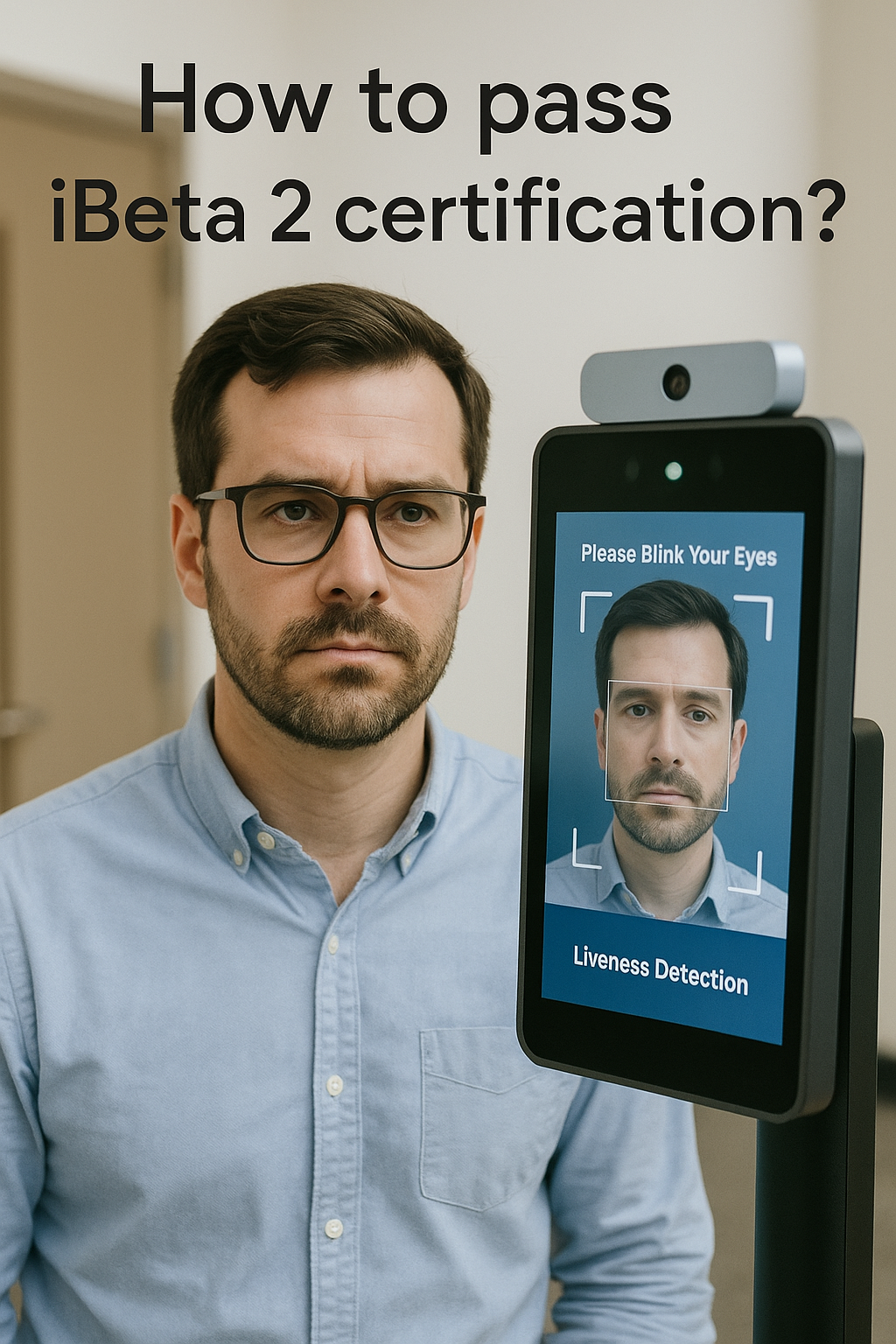
How to Pass iBeta Level 2 Certification?
The iBeta Level 2 certification is one of the most rigorous benchmarks in biometric security. Unlike Level 1, which tests resilience against simple spoofing, Level 2 certification evaluates whether a biometric system can withstand sophisticated, professional-grade attacks. Passing this test proves that a system meets the ISO/IEC 30107-3 Presentation Attack Detection (PAD) standard at a higher level of assurance — essential for industries where fraud prevention and trust are critical.
So, how can biometric vendors successfully prepare for and pass iBeta Level 2 certification?
1. Understand Level 2 Certification Requirements
Before preparation, it’s crucial to know the testing parameters:
- Spoof Attempts: Advanced artifacts such as 3D masks, silicone prosthetics, or resin fingerprint molds.
- Material Costs: ≤ USD 300 per spoof artifact.
- Timeframe: At least 48 hours allowed to create spoof attacks.
- Number of Subjects: At least 6 individuals contribute biometric samples.
- Pass/Fail Criteria:
- Extremely strict — spoof acceptance must be near zero.
- Usability must remain intact (genuine users should not be rejected excessively).
📌 In short: systems must resist professional, high-effort spoofing without frustrating legitimate users.
2. Strengthen Liveness Detection Beyond Basics
Basic defenses (like flatness or replay detection) are not enough at Level 2. Vendors must integrate multi-layered liveness checks:
- 3D Depth Analysis
- Use structured light, infrared, or time-of-flight cameras to detect real depth.
- Use structured light, infrared, or time-of-flight cameras to detect real depth.
- Sub-surface Imaging
- Analyze blood vessels, skin translucency, or sweat pores.
- Analyze blood vessels, skin translucency, or sweat pores.
- Behavioral & Motion Cues
- Detect natural micro-movements (eye blinks, pulse, head tilt).
- Detect natural micro-movements (eye blinks, pulse, head tilt).
- AI-Driven Spoof Recognition
- Train models to recognize texture differences in masks or prosthetics.
- Train models to recognize texture differences in masks or prosthetics.
💡 Tip: Combine at least two or three independent detection methods to improve reliability.
3. Conduct Advanced Internal Testing
Running internal Level 2 simulations is critical:
- Create high-quality spoofs: Invest in 3D printing, silicone molds, and advanced replay setups.
- Test across devices: Smartphones, tablets, scanners, and dedicated cameras.
- Vary environments: Different lighting, backgrounds, and distances.
- Measure metrics: FAR (False Accept Rate), FRR (False Reject Rate), SFAR (Spoof False Accept Rate).
📌 Internal failure rates should approach zero spoof acceptance before official submission.
4. Optimize for Usability and Fairness
Systems must not only resist spoofs but also remain user-friendly and inclusive:
- Keep FRR low so genuine users aren’t locked out.
- Test across age, gender, and skin tones to reduce bias.
- Ensure consistent performance in both ideal and challenging conditions.
5. Collaborate with iBeta Early
Engaging with iBeta before official testing helps streamline the process:
- Clarify the scope (general PAD certification, FIDO, Android compliance, or industry-specific testing).
- Understand test methodologies and metrics.
- Discuss timeframes and documentation requirements.
This preparation minimizes surprises during certification.
6. Avoid Common Reasons for Failure
Many systems fail Level 2 testing due to predictable mistakes:
- Over-reliance on one method (e.g., depth only, without texture analysis).
- Weakness against 3D masks or silicone prosthetics.
- High false rejections reducing usability.
- Inconsistent results across different devices or conditions.
- Insufficient demographic testing, leading to biased performance.
7. Best Practices for Success
✔ Integrate multiple liveness techniques (depth, sub-surface, behavioral cues).
✔ Simulate real Level 2 attacks internally with advanced spoof artifacts.
✔ Balance thresholds to reject spoofs but accept genuine users.
✔ Test across diverse demographics for fairness and accuracy.
✔ Document methods and results clearly for iBeta submission.
✔ Update regularly — as spoofing evolves, so should your defenses.
8. Benefits of Passing Level 2 Certification
- Proves advanced spoof resistance against professional attacks.
- Strengthens trust with regulators, clients, and end-users.
- Opens doors to high-security industries like banking, defense, and healthcare.
- Differentiates your product from vendors who only meet Level 1 requirements.
Quick Checklist: Passing iBeta Level 2
✅ Understand strict Level 2 requirements (advanced spoofs, 48+ hours, ≤ USD 300 materials).
✅ Build multi-layered liveness detection (depth + texture + motion).
✅ Run advanced internal tests with 3D masks and prosthetics.
✅ Ensure low FAR, low FRR, and near-zero SFAR.
✅ Prepare documentation and engage with iBeta early.
✅ Optimize for usability and fairness alongside security.
Related Topics
- How to pass iBeta Level 2 certification
- iBeta PAD Level 2 test preparation
- ISO/IEC 30107-3 Level 2 certification
- advanced spoof detection biometric
- iBeta liveness detection Level 2
- passing Level 2 biometric certification
- biometric PAD advanced testing
Conclusion
Passing iBeta Level 2 certification is a challenging but vital milestone for biometric vendors targeting high-security industries. Success requires more than simple spoof detection — it demands multi-layered defenses, advanced internal testing, and user-friendly performance across diverse demographics.
By preparing thoroughly and optimizing for both security and usability, biometric systems can achieve Level 2 certification and gain a competitive edge in markets where trust and compliance are essential.