What Is Data Annotation in Machine Learning? A Complete Guide
Your ML model is only as good as the data it learned from — and raw data, on its own, teaches a model nothing. Data annotation is what changes that. It turns unstructured images,...
A new portal dedicated to iBeta soutions
Your ML model is only as good as the data it learned from — and raw data, on its own, teaches a model nothing. Data annotation is what changes that. It turns unstructured images,...
Most ML teams use data labelling and data annotation interchangeably — and then run into trouble when one approach fails to deliver what the model actually needs. The confusion is understandable: both involve preparing...
In today’s security-conscious world, biometric systems—leveraging fingerprints, facial recognition, and voice—demand rigorous testing to ensure they resist spoofing and fraud. This is where iBeta comes in. But what is iBeta, exactly? This article delves...
When exploring biometric security and Presentation Attack Detection (PAD), one frequently encounters references to the iBeta dataset. While iBeta is best known as a quality assurance and biometric testing lab, the term “iBeta dataset”...
The iBeta Level 1 dataset is the foundational dataset used during iBeta’s Level 1 Presentation Attack Detection (PAD) testing. It is designed to measure how well a biometric system — such as facial recognition,...
Obtaining iBeta certification is a significant milestone for any company developing biometric authentication solutions. It demonstrates compliance with ISO/IEC 30107-3 Presentation Attack Detection (PAD) standards, boosts credibility in the global marketplace, and provides assurance...
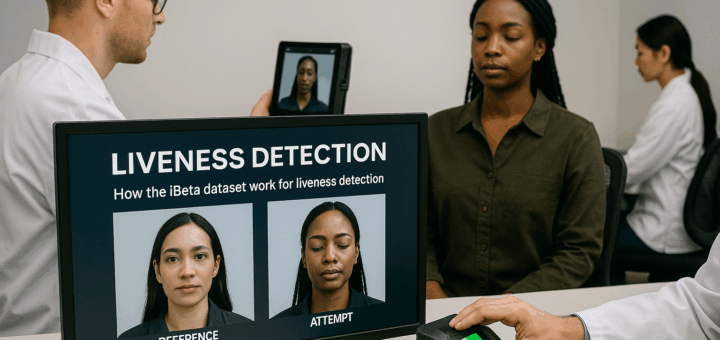
The iBeta dataset plays a central role in evaluating whether biometric systems can correctly identify live human users and reject spoof attempts. This capability is known as liveness detection. By combining real biometric data...
In an era where digital identity verification and biometric authentication are becoming mainstream, security and trust are non-negotiable. iBeta certification has emerged as a benchmark for biometric security, especially in proving compliance with the...
The iBeta Level 1 certification is the first step in proving that a biometric system can withstand basic spoofing attempts. Passing this stage demonstrates compliance with the ISO/IEC 30107-3 Presentation Attack Detection (PAD) standard...
The iBeta Level 2 dataset is the advanced dataset used in Level 2 Presentation Attack Detection (PAD) testing. It builds on the Level 1 dataset by introducing more sophisticated spoofing attempts, requiring biometric systems...
The iBeta Level 2 certification is one of the most rigorous benchmarks in biometric security. Unlike Level 1, which tests resilience against simple spoofing, Level 2 certification evaluates whether a biometric system can withstand...