What Is Data Annotation in Machine Learning? A Complete Guide
Your ML model is only as good as the data it learned from — and raw data, on its own, teaches a model nothing. Data annotation is what changes that. It turns unstructured images, text, audio, and video into structured training material that machine learning algorithms can actually use.
This guide covers what data annotation is, how it works, which types apply to which tasks, and what separates good annotation practice from expensive rework. As of 2026, the machine learning market is projected to grow from $26 billion in 2023 to $225 billion by 2030 [1] — and annotated training data is the input that makes every model in that market possible.
What Is Data Annotation
Data annotation is the process of adding meaningful tags, labels, or metadata to raw data — images, text, audio, video, or 3D point clouds — so that machine learning algorithms can process and understand it. Without annotation, an ML model sees only raw inputs with no signal about what they mean or how to interpret them.
The annotated dataset becomes the ground truth: the reference against which a model measures its predictions during training. When the model gets it wrong, the annotation tells it what the correct answer should have been. Repeat that process across thousands or millions of examples, and the model learns to generalise.
Data annotation is primarily associated with supervised learning, where the model trains on labelled examples. It is also used in reinforcement learning from human feedback (RLHF), where human annotators rank or rate model outputs to guide training, and in semi-supervised learning, where a small annotated set bootstraps training on a much larger unlabelled dataset.
Read also: Data Annotation VS Data Labelling
Why Data Annotation Matters for ML Model Performance
The quality of annotated training data is the single biggest determinant of model performance outside of architecture choice. A model trained on inaccurate or inconsistent annotations will learn the wrong patterns — and those patterns show up as silent failures in production, not as loud errors during training.
According to the 2023 Global Trends in AI Report by S&P Global, data management — which encompasses annotation quality — is the primary technical barrier organisations face when implementing AI and ML [2]. That finding holds across industries: the bottleneck is rarely the algorithm. It is the data.
Poor annotation introduces two types of problems. Systematic errors — where the same mistake is made consistently — skew the model toward wrong predictions across an entire class. Random errors — inconsistent annotation by different annotators — add noise that degrades confidence scores and makes model behaviour unpredictable at the boundary between classes.
Types of Data Annotation
The annotation type determines both the format of the training data and the model architecture the data can train. Matching type to task is the first decision in any annotation project.
Image annotation
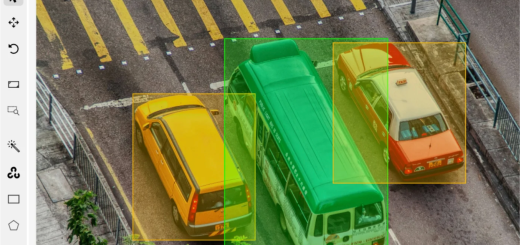
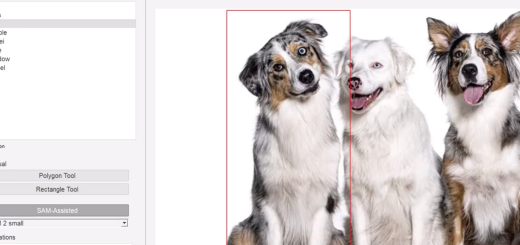
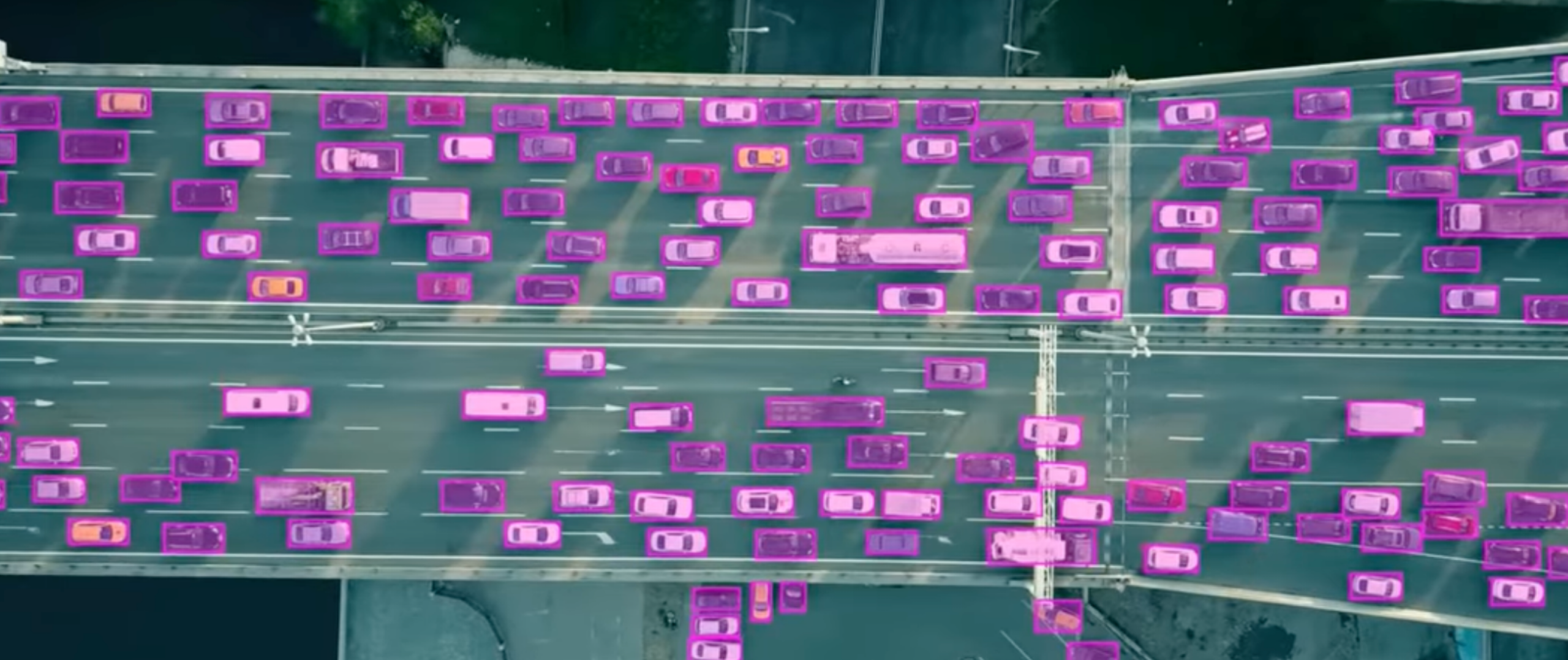
Image annotation prepares visual data for computer vision models. Bounding box annotation draws rectangular frames around objects to identify their position — the fastest and most widely used technique for object detection. Polygon annotation traces precise outlines around irregular shapes, necessary when a rectangle introduces too much background noise. Semantic segmentation assigns a class label to every pixel, treating all instances of a class as one region. Instance segmentation goes further, assigning unique IDs to each individual object so a crowd-counting or tracking model can distinguish one person from another. Keypoint annotation marks specific coordinates on an object — body joints for pose estimation, facial landmarks for expression recognition.
Text annotation
Text annotation structures language data for natural language processing models. Named entity recognition (NER) annotation marks spans of text as people, organisations, locations, dates, or custom domain-specific categories. Relation annotation links entity pairs and names the relationship between them — necessary for knowledge graph construction and document-level information extraction. Sentiment annotation at the span level identifies which phrase carries sentiment and what aspect it targets, going beyond document-level positive or negative tags. Intent and slot annotation for conversational AI assigns both an intent class to each utterance and extracts structured fields (slots) from within it.
Audio annotation
Audio annotation covers speech transcription, speaker diarisation (identifying who speaks when), emotion and tone tagging, and sound event detection. Each task requires a different annotator skill set. Transcription can be handled by general annotators with accuracy-based quality metrics. Emotion annotation and domain-specific speech recognition tasks — medical dictation, legal proceedings — require annotators with relevant background or continuous expert support.
Video annotation
Video annotation applies image annotation techniques across time, adding temporal complexity. Object tracking links annotations across frames so the model understands that the same object persists across time, not just across space. Action recognition annotation classifies what is happening within a segment of footage. Video annotation is more resource-intensive than image annotation because even a short clip contains thousands of frames, and consistency across frames is a quality requirement that does not exist for static images.
3D and LiDAR annotation
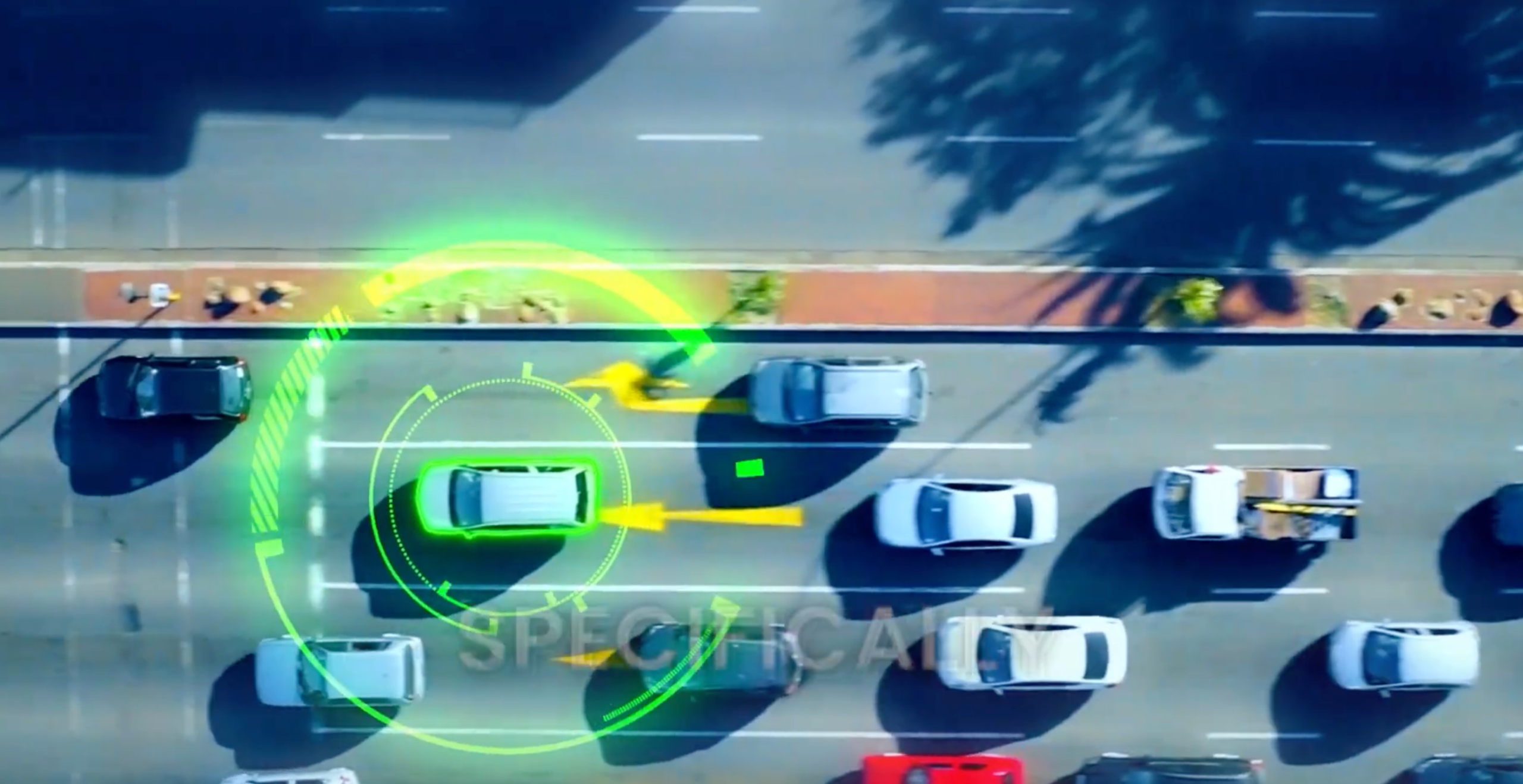
3D point cloud annotation is required for applications that use depth sensors — primarily autonomous vehicles and robotics. Annotators place 3D cuboids around objects in the point cloud, providing the model with information about object depth, volume, and orientation that a 2D image cannot supply. LiDAR annotation is typically combined with camera image annotation to train multi-modal perception models.
How the Data Annotation Process Works
A production annotation project follows a structured pipeline. Skipping steps early typically produces quality problems that cost more to fix later than they would have cost to prevent.
- Step 1: Define the annotation task. Determine what information needs to be extracted or marked, based on the model requirements. This means specifying the label schema, the annotation type, and the edge case rules — not just the category names.
- Step 2: Build the annotation guidelines. Clear guidelines are the single most effective quality control tool. They should define every label with examples, provide visual references for ambiguous cases, and specify what to do when the annotator is uncertain.
- Step 3: Run a pilot batch. Annotate 50 to 100 items with multiple annotators before scaling. Measure inter-annotator agreement — the rate at which different annotators applying the same guidelines reach the same answer. Agreement below 80% signals that the guidelines need revision before any further annotation.
- Step 4: Annotate at scale. With validated guidelines and agreement metrics established, annotation can proceed at volume. Quality sampling — reviewing a random subset of completed items against a gold standard — should continue throughout.
- Step 5: Validate and deliver. Final review against the project quality threshold. Items that fail quality review return to the annotation queue; they are not simply discarded.
Data Annotation Methods: Manual, Automated, and Hybrid
Manual annotation means human annotators tag each data point by hand. It is slower and more expensive per item, but preferred when accuracy is critical — medical imaging, legal document parsing, safety-relevant applications where a wrong label can have downstream consequences.
Automated annotation uses pre-trained models to generate labels without human input. It works well for structured data with clear rules, or as a first pass on tasks where the model is already reasonably capable. The output of automated annotation almost always requires human review before it is used for training: errors in automated labels, if untreated, become errors in the next generation of the model.
Hybrid annotation — also called model-assisted or AI-assisted annotation — is the most common approach for large-scale projects. A pre-trained model generates initial annotations; human annotators review and correct them. This combination cuts annotation time significantly for well-defined tasks while preserving the human quality check that pure automation skips. It is the standard approach for production annotation pipelines in 2026.
Data Annotation Tools
The right tool depends on data type, team size, and whether the project requires on-premise deployment for data security reasons. Key capabilities to evaluate are: support for your annotation type (bounding boxes, polygons, NER spans, keypoints), model-assisted pre-labelling, inter-annotator agreement reporting, review and audit workflows, and integration with your ML training pipeline.
Widely used platforms as of 2026 include Labelbox, Scale AI, SuperAnnotate, V7, CVAT (open source, developed by Intel), and Label Studio (open source). For specialised domains — medical imaging, geospatial data — domain-specific platforms often outperform general-purpose tools because the annotation interface matches the data format.
Teams that need full control over data security or have non-standard annotation requirements sometimes build internal tooling. The cost of this is higher than it appears upfront: according to Innodata research, the annotation tooling development often requires more work than the ML project itself [3]. Evaluate build-vs-buy carefully before committing.
Data Annotation Quality: What Actually Determines It
Inter-annotator agreement is the primary quality signal. It measures how consistently different annotators applying the same guidelines reach the same answer. Common metrics are Cohen’s kappa for classification tasks and Intersection over Union (IoU) for bounding box and segmentation tasks. Both should be tracked from the pilot batch onward.
Gold standard sets — items with verified correct answers — serve as a continuous quality check. Inserting gold items into the annotation queue without annotators knowing which items they are is the most reliable way to detect drift in annotator accuracy over time.
Annotation guidelines are a quality control tool as much as an instruction document. Every time inter-annotator agreement drops on a specific label or edge case, the guidelines need an update and a recalibration session. Guidelines that are not revised as the project progresses accumulate ambiguities that compound into training data noise.
In-House vs Outsourced Data Annotation
Organisations that handle annotation in-house maintain tighter control over data security and annotator training, but carry the full cost of tooling, management, and workforce. According to Cognilytica research, companies spend approximately five times more on internal annotation than on third-party services [4].
Outsourced annotation makes practical sense for high-volume, well-defined tasks where the data can be shared externally. The main risks are quality variability and the overhead of managing a vendor relationship. Both are manageable with a clear annotation guide, pilot-first onboarding, and regular quality sampling throughout the project.
Most mature annotation operations use a hybrid model: outsource general, high-volume tasks to a vendor; keep specialised, sensitive, or proprietary tasks in-house. The split point depends on the sensitivity of the data and the complexity of the annotation task.
FAQ
Data annotation is the process of tagging raw data — images, text, audio, or video — with labels or metadata so that a machine learning model can learn from it. Without annotation, a model has no reference for what its inputs mean. With annotation, it learns to recognise patterns by comparing its predictions against the annotated ground truth.
Data labelling assigns a single predefined category to a data point. Data annotation is the broader term: it covers labelling and also includes more complex marking tasks like drawing bounding boxes, tracing object outlines, tagging entity spans in text, or linking relationships between elements. Labelling is a subset of annotation.
The main types are image annotation (bounding boxes, polygons, segmentation, keypoints), text annotation (NER, relation tagging, sentiment, intent and slot), audio annotation (transcription, speaker diarisation, emotion tagging), video annotation (object tracking, action recognition, frame classification), and 3D/LiDAR annotation for depth-sensor data. The right type depends on the ML task and the model architecture.
There is no universal number. The required volume depends on the complexity of the task, the number of classes, the variance in the data, and the target model performance. Simple binary classifiers can reach acceptable performance with thousands of annotated examples. Complex detection or segmentation models typically require tens of thousands to hundreds of thousands. Starting with a smaller annotated set and measuring model performance under active learning conditions is often more efficient than trying to annotate a fixed volume upfront.
Inter-annotator agreement measures how consistently multiple annotators applying the same guidelines label the same items. Low agreement signals ambiguous guidelines or a task that is harder to define than expected — both of which produce noisy training data at scale. Cohen’s kappa is the standard metric for classification; Intersection over Union (IoU) is standard for bounding boxes. Measuring agreement before scaling is a required quality gate.
Not yet for most production use cases. Automation can accelerate annotation significantly through model-assisted pre-labelling, but fully automated annotation on novel or ambiguous data still produces error rates that require human review before the output is safe to use for training. The practical ceiling for automation depends on how well-defined and how similar to existing training data the new task is.
Evaluate tools against four criteria: annotation type support (confirm it handles your specific task), quality workflow features (inter-annotator agreement tracking, gold standard insertion, review queues), model-assisted pre-labelling capability (especially important at scale), and integration with your ML training pipeline. Run a paid pilot with a shortlisted tool before committing to a full project — annotation tool limitations typically only appear under realistic workload conditions.