How to Pass iBeta Level 1 Certification?
The iBeta Level 1 certification is the first step in proving that a biometric system can withstand basic spoofing attempts. Passing this stage demonstrates compliance with the ISO/IEC 30107-3 Presentation Attack Detection (PAD) standard and builds trust with regulators, clients, and end-users.
So, how can biometric vendors successfully prepare for and pass iBeta Level 1 certification? Let’s break it down step by step.
1. Understand Level 1 Certification Requirements
Before starting the process, it’s important to know the rules of Level 1 testing:
- Number of attempts:
- 150 spoof attempts
- 50 genuine authentication attempts
- 150 spoof attempts
- Attack constraints:
- Spoofs must be created using materials costing no more than USD 30.
- Spoofs must be created and tested within 8 hours.
- Spoofs must be created using materials costing no more than USD 30.
- Pass/Fail standard:
- 0% spoof acceptance allowed (no spoof should be successful).
- Genuine acceptance must remain high to ensure usability.
- 0% spoof acceptance allowed (no spoof should be successful).
2. Build Strong Liveness Detection
Since Level 1 attacks are low-cost and simple, systems must demonstrate basic spoof resistance. Key techniques include:
- Flatness detection: Distinguish between a 2D image and a 3D face.
- Replay detection: Spot screen glare, pixel distortion, and repetitive patterns in video replays.
- Texture analysis: Identify the difference between paper, ink, or screens vs real skin.
- Depth sensing: Use camera depth or optical cues to reject photos and cutouts.
💡 Tip: Combine multiple techniques instead of relying on a single method. Multi-layered liveness detection greatly increases success rates.
3. Conduct Internal Pre-Testing
Do not rely solely on iBeta’s lab test. Before submitting your system:
- Simulate attacks internally: Use printed photos, paper masks, and smartphone video replays.
- Measure error rates: Track False Accept Rate (FAR) and False Reject Rate (FRR) under test conditions.
- Iterate on weaknesses: If spoofs are successful, refine your liveness detection.
4. Balance Security and Usability
Passing certification isn’t just about blocking spoofs — the system must still recognize genuine users easily.
- Keep FRR low: Minimize false rejections so users aren’t frustrated.
- Test across different environments: lighting, camera quality, angles.
- Ensure performance on diverse demographics: skin tones, facial features, age groups.
5. Engage with iBeta Early
Communicating with iBeta before submission can help clarify requirements:
- Confirm whether you’re pursuing general PAD certification, FIDO biometric certification, or Android biometric compliance.
- Align on timeframes and scope.
- Understand how results will be reported.
This reduces the chance of surprises during official testing.
6. Optimize for Certification Success
To maximize the likelihood of passing:
- Use redundancy: Implement multiple liveness checks (texture + depth + motion).
- Fine-tune thresholds: Ensure spoof detection is strict enough without over-rejecting real users.
- Test on various devices: Especially important for mobile-based biometric apps.
- Prepare documentation: Be ready to explain how your system handles spoof attempts.
7. Common Reasons for Failing Level 1
Avoiding common pitfalls can dramatically improve your success rate:
- Over-reliance on one method (e.g., only flatness detection).
- High false reject rate, leading to poor user experience.
- Failure under certain lighting or hardware conditions.
- Limited demographic testing, resulting in bias.
- Insufficient internal testing before submission.
8. Benefits of Passing iBeta Level 1
Once your system passes, you’ll gain:
- Global credibility: Recognition as a spoof-resistant biometric system.
- Regulatory approval: Alignment with ISO/IEC 30107-3 standards.
- Customer trust: Assurance for banks, healthcare, and government clients.
- Eligibility for Level 2 testing: A stepping stone toward advanced certification.
Quick Checklist: How to Pass iBeta Level 1
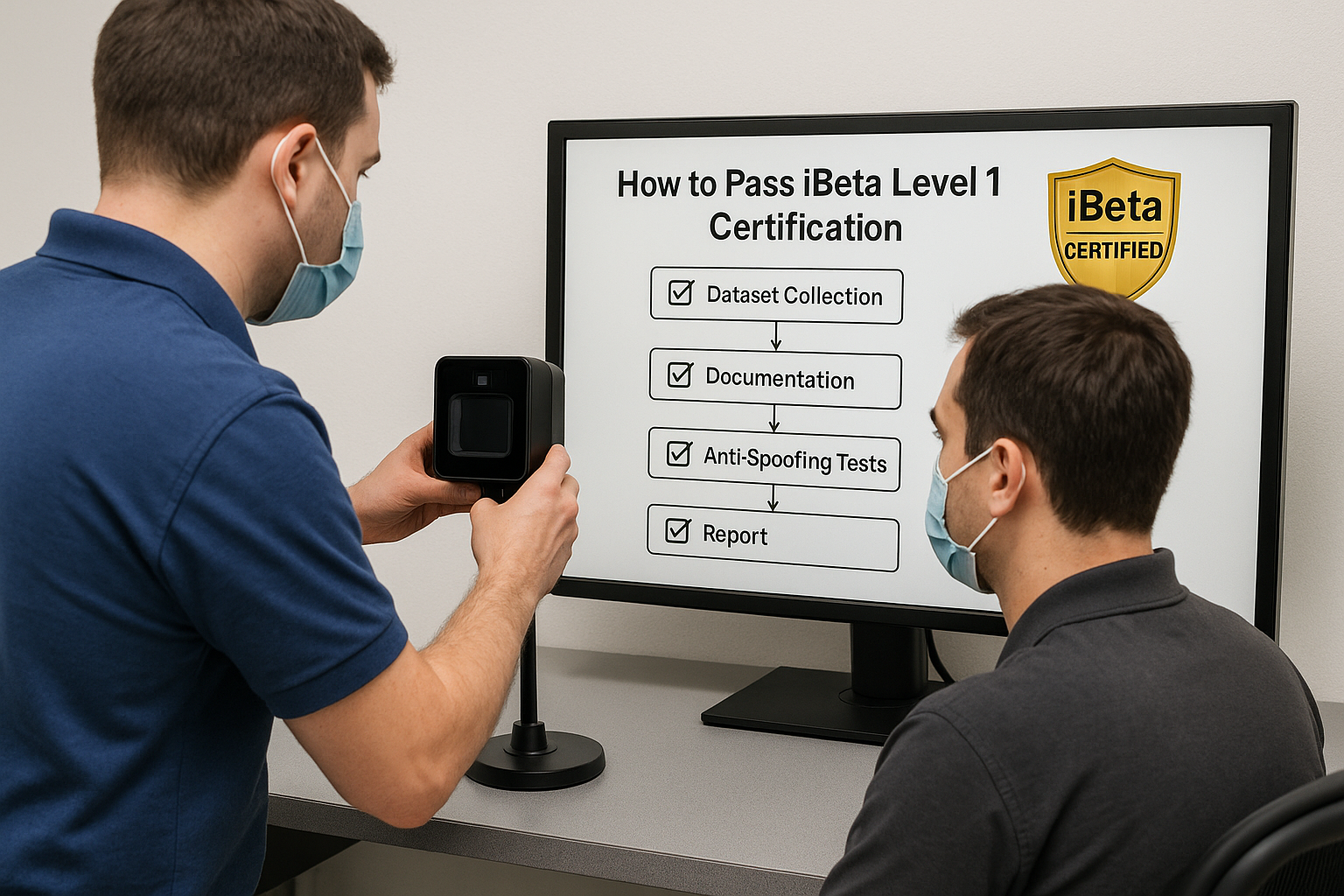
✔ Understand certification requirements (150 spoofs, 50 genuine, ≤ USD 30 materials, 8 hours).
✔ Build strong liveness detection (flatness, texture, replay, depth).
✔ Run internal tests with low-cost spoofs before submission.
✔ Balance spoof resistance with usability (low FRR).
✔ Communicate with iBeta about scope and process.
✔ Avoid common pitfalls like bias or single-method reliance.
Conclusion
Passing iBeta Level 1 certification requires a biometric system to withstand all basic spoof attempts while keeping usability intact. Success depends on a combination of robust liveness detection, thorough pre-testing, usability optimization, and careful preparation.
For vendors, Level 1 certification is more than a test — it’s the foundation for market credibility, compliance, and trust, paving the way toward more advanced Level 2 certification.